

A Massachusetts police officer responding to reports of coyote sightings shot and killed a pet dog, claiming that he thought the husky was a the wild animal he was pursuing.
The one-year-old dog, named Odin, had a flea collar.
The animal control officer said that he only saw the flea collar after he killed the dog.
The dog owner, Kirk Rumford, told reporters that he couldn’t understand how someone could mistake his large, furry husky for a scraggy coyote.
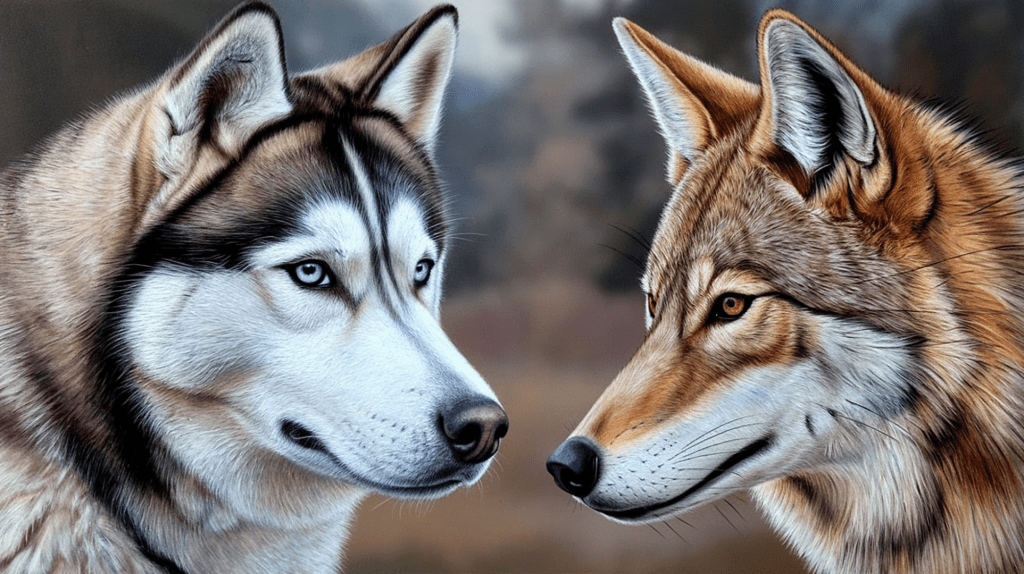
So, how hard is it to identify coyotes from huskies?
There are key differences between the two animals that often capture our imagination. While they may share some physical characteristics, their behaviors, habitats, and appearances distinguish one from the other.
Physical Appearance
Size and Build
- Coyotes: Typically weigh between 24 to 46 pounds and stand about 21 to 24 inches tall at the shoulder. They have a lean, agile build that allows them to run swiftly.
- Huskies: Generally weigh between 35 to 60 pounds and stand about 20 to 24 inches tall at the shoulder. They have a more robust and muscular build, designed for endurance and strength.
Coat and Color
- Coyotes: Their fur is usually a mix of gray, brown, and tan, providing excellent camouflage in their natural habitats. They have a bushy tail with a black tip and a more slender face.
- Huskies: Known for their thick double coats, huskies come in various colors, including black, gray, red, and agouti. They often have striking facial markings and blue or multi-colored eyes.
VIDEO: Heartbreak after a Massachusetts police officer fatally shot a family’s beloved husky, claiming he mistook it for a coyote.
Behavior and Temperament
Social Structure
- Coyotes: Generally solitary or found in small family groups. They are known for their adaptability and can thrive in urban environments as well as rural areas.
- Huskies: Highly social animals that thrive in packs. They are friendly and affectionate towards humans and other dogs, making them popular as family pets.
Vocalizations
- Coyotes: Known for their distinctive howls, yips, and barks, which they use to communicate with each other, especially during the night.
- Huskies: Also vocal, but their sounds are more varied, including howls, barks, and even “talking.” They are known for their expressive vocalizations, which can be quite entertaining.
Habitat and Range
Natural Habitat
- Coyotes: Found throughout North America, from urban areas to deserts and forests. They are highly adaptable and can thrive in various environments.
- Huskies: Domesticated dogs originally bred by the Chukchi people of Siberia for sledding and companionship. They are typically found in homes and are not wild animals.
Range
- Coyotes: Their range extends from Canada to Central America, with populations in every state in the U.S.
- Huskies: As domesticated animals, they are found in homes worldwide, particularly in colder climates where their thick fur is an advantage.
Conclusion
While coyotes and huskies may share some superficial similarities, their differences in size, appearance, behavior, and habitat are significant. Understanding these distinctions, can help you recognize them in the wild or in your neighborhood. Knowing how to tell these two apart can give you peace of mind.
 BigStory.Media